×

The Standard e-Paper
Read Offline Anywhere





Audio By Vocalize
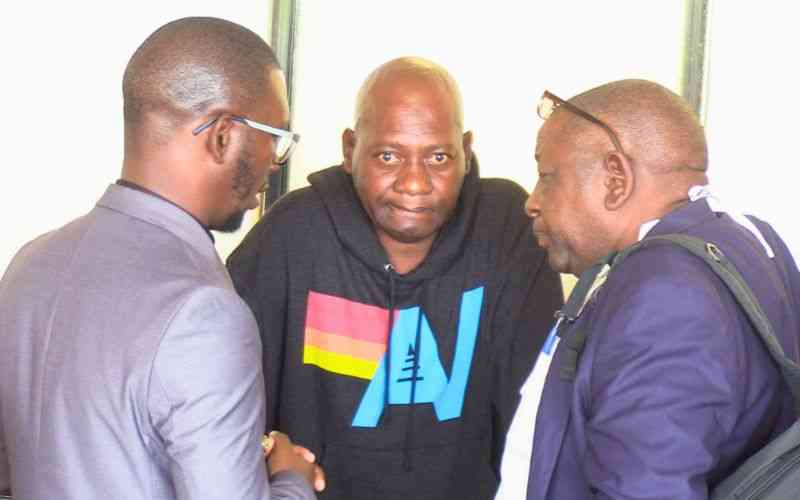
Key witnesses in the Kwa Binzaro cult massacre trial have placed controversial pastor Paul Makenzi and his seven co-accused at the centre of the tragedy.
Testifying during a rare on-site court visit in Shakahola and Kwa Binzaro forests, the witnesses exposed horror accounts about the continued influence of pastor Makenzi, who allegedly perpetuated the second wave of the fasting cult while in prison.
In the presence of Mombasa High Court judge Wendy Kagendo, the witnesses told the court that the main suspects lived in Bethlehem, Galilaya and Judea villages within Shakahola forest.
Under cross-examination by prosecutors and defense lawyers, one witness, identified as JO, gave a chilling testimony of how he lost six children in the second wave of the cult in 2025 while confined in temporary structures deep inside the Kwa Binzaro forest.
According to the witness, he and his children were locked in separate rooms and subjected to starvation. He told the court that all six of his children eventually died.
During his time at the main homestead, JO testified that he saw some of the accused persons, including Tom Ochieng, James Kahindi Kazungu, and Shallyne Temba.
The witness further testified that Kahindi allegedly made a phone call to Makenzi while he was in custody, during which the witness overheard the controversial pastor instructing him to always pray for those beginning their fasting journey so they could "complete the journey faster."
The witness further claimed that Makenzi would pray for followers while in custody and that he was regularly informed whenever new arrivals reached the Shallyne compound.
Further, JO told the court that he personally spoke to Makenzi after one such phone call.
As the court toured the compound, it was able to visualise the physical setting described in the testimony.
The layout of the homestead helped contextualise claims that occupants were locked inside rooms from the outside to prevent them from escaping.
JO stated that individuals assigned to watch over those confined inside would sit on structures outside the three-roomed house and monitor their movements.
One of the most emotional moments recalled during the visit was JO's account of watching his children slowly succumb to starvation.
He remembered them crying out for water as their condition worsened.
Overwhelmed by grief and frustration, he said he raised an alarm, which allegedly led to him being moved to another room within the compound.
The Shallyne homestead had six visible structures, including a three-room, semi-permanent mud-walled house.
The court was also shown where the belongings of people who had died within the compound could be disposed of by burning.
Another protected witness gave chilling testimony of how a final eschatology meeting led by Makenzi and Sharline Anido involved hundreds of followers of the Good News International Church.
He disclosed that the meeting happened in January 2023, and he personally saw Makenzi living in the area.
According to the witness, those in attendance were prepared for an extended fasting programme immediately after the gathering.
"On that particular day, people had been prepared for the beginning of a continuous fast, and from then on, people started fasting," said JO.
The witness also identified all eight accused persons before the court and described Anido as one of the movement's most influential leaders.
He said Anido regularly addressed large gatherings and played an active role in influencing followers.
The court heard that she later relocated to Kwa Binzaro after surviving the Shakahola incident.
The judicial team also visited homes allegedly occupied by Makenzi and co-accused James Kahindi, who were the first and eighth suspects in the trial, respectively.
The court also heard that Kahindi lived with his wife, who is also a suspect, together with their five children and a nephew who was reportedly the first person to die in the Shakahola massacre, and his death was reported at Lango Baya police station.
They further revealed that Kahindi's five children remain unaccounted for and are suspected to have died during the tragedy.
"His death was reported as if it were a normal illness, and a burial permit was issued by the area chief because deaths of people inside the forest had not been discovered yet,’’ said a detective.
When questioned by the judge about the condition of the body, the witness stated that it appeared severely emaciated but said he was not medically qualified to determine the cause of death.
"The body was transported to Mariakani for burial,’’ said the witness.
Investigators also revealed that 190 children were among the casualties.
The prosecution also raised alarm at how Lango Baya Police Station, covering five locations of approximately 1,500 hectares, including the vast Shakahola forest, is still ill-equipped with no single vehicle even after the massacre.
This comes even as prosecutors say that three years after the massacre, some teachings associated with Makenzi continue to influence former followers despite years of investigations and court proceedings.
Subscribe to our newsletter and stay updated on the latest developments and special offers!